
Search "biodegradable bags Malaysia" and you'll find no shortage of products happy to wear that label — garbage bags, dustbin liners, straws, even shopping bags. It's one of the most-searched eco terms in the country. It's also one of the least meaningful.
Here's the uncomfortable truth: "biodegradable" is not a certification. It's not a regulated standard. Almost anything can legally call itself biodegradable, because technically, almost everything breaks down eventually — glass, metal, and yes, most plastic too, given enough centuries. The word tells you close to nothing about whether a product is actually good for the environment.
Why "Biodegradable" Sounds Eco-Friendly (But Often Isn't)
"Biodegradable" simply means a material can be broken down by microorganisms at some point. That's it. The label makes no promises about how long that takes, under what conditions it happens, or what gets left behind in the process.
A lot of biodegradable-labelled plastic is still fossil-fuel based. It may technically qualify as biodegradable while taking decades to break down in a landfill, releasing the same additives and residues as conventional plastic the whole time. For a Malaysian household trying to make a genuinely better choice at the shop or online, "biodegradable" alone simply doesn't tell you enough to decide.
The Malaysian Search Trap: "Biodegradable" vs "Compostable"
Malaysians search for "biodegradable garbage bags" and "biodegradable dustbin bags" far more often than "compostable" versions of the same products. That's understandable — "biodegradable" sounds more familiar, more everyday. But it's the wrong word to anchor a purchase decision on.
"Compostable" is the term that actually carries weight, because it comes with testable, certifiable requirements: a defined breakdown timeframe, specific end products (water, CO₂, biomass), and — critically — no toxic residue or microplastics left behind. A bag can be marketed as biodegradable without meeting any of that. A bag can only be marketed as certified compostable if it's been independently tested and proven to.
What Happens When "Biodegradable" Goes Wrong: Oxo-Degradable Bags
The clearest example of "biodegradable" gone wrong is the oxo-degradable bag — a conventional plastic bag with a chemical additive that makes it fragment faster when exposed to heat, light, or oxygen. On paper, faster breakdown sounds like progress.
It isn't. Oxo-degradable plastic doesn't compost — it shatters into microplastic fragments that spread into soil, waterways, and eventually the food chain. Malaysia already ranks highest among 109 countries studied for microplastic consumption, with researchers estimating Malaysians ingest an average of 502.3mg of microplastics per person per day, largely through seafood. Oxo-degradable products marketed under the "biodegradable" umbrella are a direct contributor to that problem, not a solution to it.
The Certifications That Actually Prove Something
If "biodegradable" alone isn't enough, what should you actually look for? Three marks currently carry real weight in the Malaysian market:
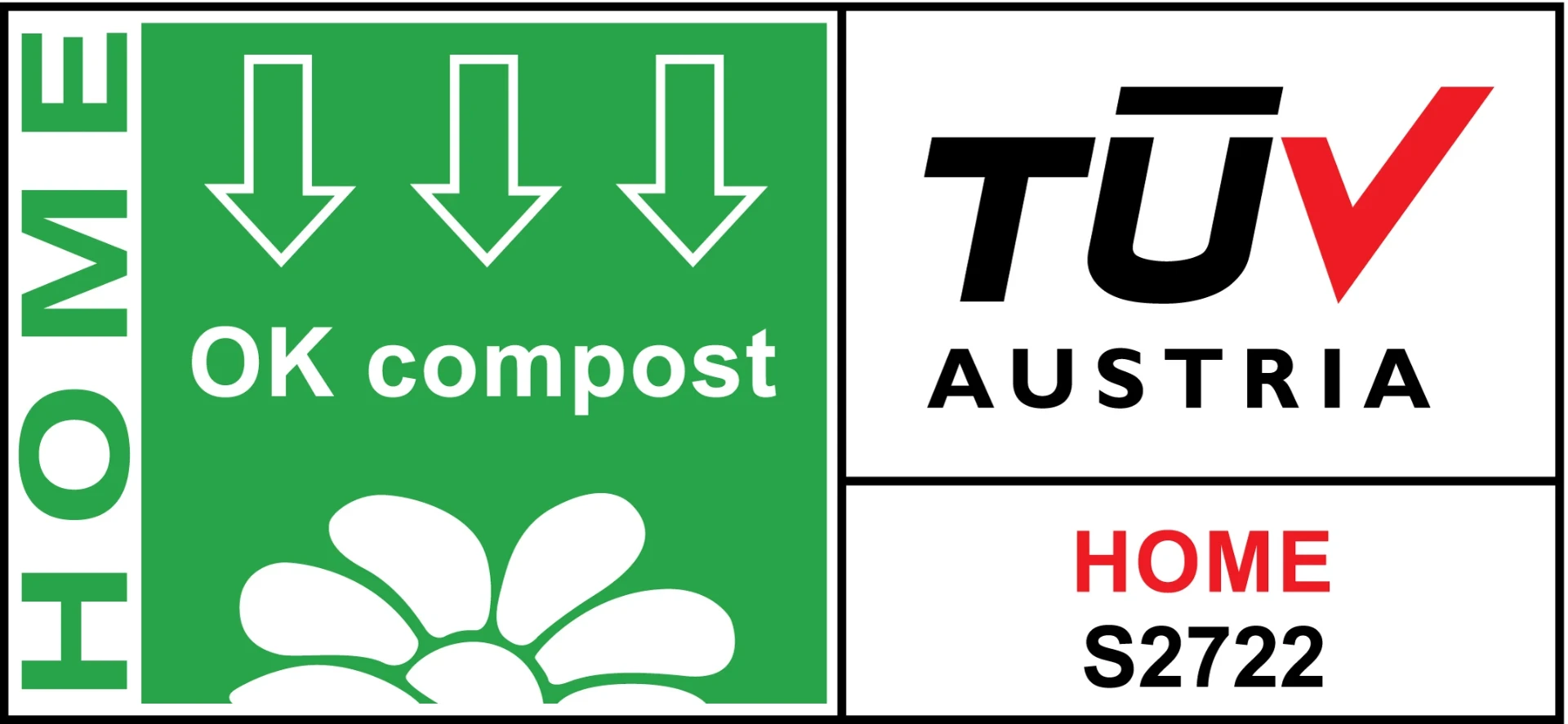 TÜV Austria OK Home Compost — the gold standard for home compostability, independently verified by an Austrian certification body
 SIRIM Eco Label — Malaysia's own environmental performance certification, managed by SIRIM QAS International
 MyHijau — the national eco-label issued by the Malaysian Green Technology and Climate Change Corporation (MGTC), the trusted local benchmark for genuinely green products
A product carrying one of these marks has been tested by an independent third party. A product that only says "biodegradable," with no logo or certification body named, has not.
A Practical Checklist Before You Buy
Next time you're choosing a garbage bag, dustbin liner, or straw and the packaging says "biodegradable," ask three quick questions:
1. Is there an actual certification logo, or just the word "biodegradable" on its own? 2. Does the packaging say how long it takes to break down, and under what conditions? 3. Is it made from a plant-based material (like certified compostable biopolymer) rather than a chemically-treated fossil-fuel plastic?
If the answer to all three is unclear, the "biodegradable" label is doing more marketing work than environmental work.
The Bottom Line
"Biodegradable" isn't a lie, exactly — it's just a word that promises far less than it sounds like it does. For Malaysian households genuinely trying to cut down on plastic waste and microplastic exposure, the safer bet is a specific, testable, certified claim: compostable, TÜV Austria OK Home Compost, SIRIM Eco Label, or MyHijau. Those are the words that have actually been checked.


